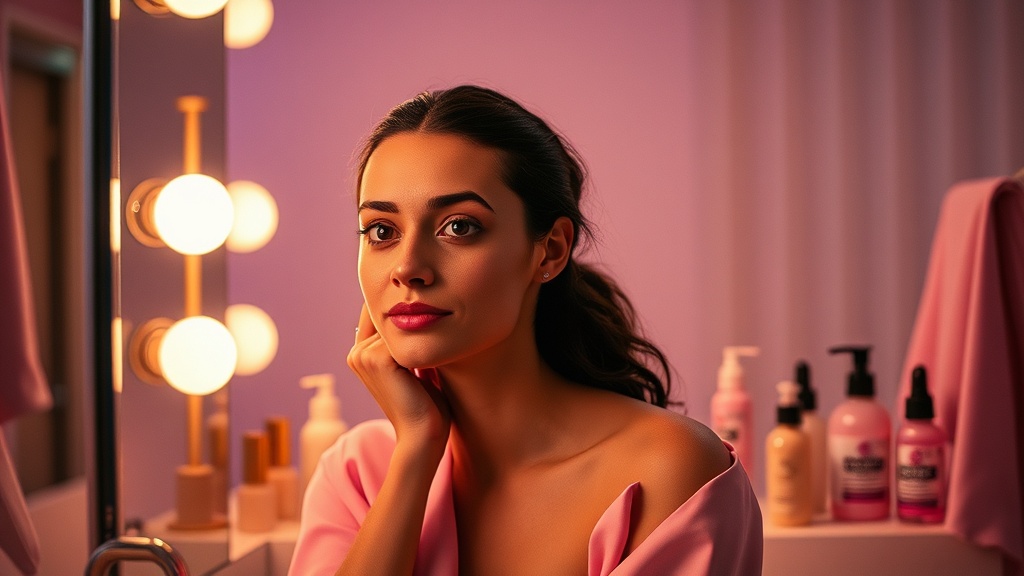
Why Your Skincare Routine Feels Like a Full-Time Job

Imagine it's 11:30 PM. You're standing in front of your bathroom mirror, staring at a shelf of glass bottles that cost more than your weekly grocery budget. You've just read a thread about "skin barrier repair," a video about "slugging," and a dozen articles claiming your current moisturizer is actually aging you. You feel behind. You feel like you're failing at basic self-care because you haven't mastered a twelve-step routine that involves fermented seaweed and glacial water. This isn't just about vanity; it's about the way consumer culture has turned a simple act of hygiene into a high-stakes performance of identity and status.
The beauty industry doesn't just sell products; it sells a sense of inadequacy. By the time you realize you need a specialized serum for your specific type of redness, the industry has already moved the goalposts. We are constantly told that our natural skin—which, let's be honest, has pores and texture—is a problem to be solved. This post breaks down why the modern skincare movement feels so exhausting and how to reclaim your ritual without the mental load.
Is the multi-step routine actually necessary?
The short answer? No. Most dermatologists will tell you that a consistent, simple routine is far more effective than a complex one that you can't actually maintain. The math-to-benefit ratio for a ten-step routine is often abysmal. You spend a significant amount of money and time on products that might actually be stripping your skin's natural defenses. When we talk about the "skin barrier," we're talking about the physical shield that keeps moisture in and irritants out. Over-using actives like retinol or high-percentage acids can actually damage this barrier, leading to more inflammation and more products to "fix" it.
The rise of "skintellectualism"—the idea that you need a PhD in chemistry to buy a cleanser—is a marketing tactic. It makes you feel like you need to constantly research ingredients like niacinamide, peptides, or hyaluronic acid. While knowing what you're putting on your body is great, the pressure to be an expert in your own bathroom is a heavy mental load. We see this in the way trends cycle through TikTok; one week it's all about oil-based cleansing, and the next, we're told to avoid oils at all costs. This constant shifting makes it nearly impossible to feel settled in your identity or your habits.
The Cost of the "Glass Skin" Standard
The pursuit of "glass skin"—that poreless, translucent, almost inhuman glow—is a modern standard that relies on heavy filtering and professional lighting. It creates a false reality. When we aim for a standard that is physically impossible for most humans to achieve without procedures, we are setting ourselves up for a cycle of dissatisfaction. This is particularly true when we consider how much time and money is diverted toward these unattainable ideals. Instead of seeing skincare as a tool for health, it becomes a tool for social signaling.
- The Time Tax: A complex routine takes 20-30 minutes. In a world where we are already overworked, this is time stolen from rest.
- The Financial Tax: The "shelfie" culture encourages us to own a collection of products that we may not even use, creating a cycle of waste.
- The Mental Tax: The constant need to cross-reference ingredients and check for compatibility creates a low-level anxiety about "doing it wrong."
If you find yourself feeling guilty for not having a "perfect" routine, remember that your skin is an organ, not a canvas. Its primary job is to protect you, not to look like a filtered Instagram post. You can find more information on skin health and the science of the skin barrier at the American Academy of Dermatology, which offers science-backed advice that isn't trying to sell you a specific brand.
Why does skincare feel so expensive lately?
The pricing of skincare has undergone a massive shift. We've moved from basic drugstore staples to a market where "prestige" brands can charge triple-digit prices for a moisturizer that has a similar ingredient list to a mid-range version. This is often justified by "brand equity" or "luxury experience," but for many, it's a barrier to basic self-care. When skincare is marketed as a luxury, it subtly implies that those who can't afford it are neglecting their health or appearance. This is a classic way to tie consumption to worth.
The "beauty-industrial complex" thrives on this. By creating a sense of urgency—that your skin is "aging" or "damaged"—they ensure you keep coming back for the next "miracle" solution. It's a cycle of perceived deficiency. We are told we are one serum away from perfection, but the definition of perfection is always moving. This is why the "minimalist" movement in beauty is gaining traction; it's a rebellion against the exhaustion of choice.
How can I simplify my routine without feeling "behind"?
The goal is to move from a culture of "more is better" to "what works for me." This requires unlearning the habit of comparing your bathroom shelf to a creator's video. A truly effective routine can be as simple as a cleanser, a moisturizer, and a sunscreen. That's it. Everything else is an optional addition, not a requirement for a functional life. If a product makes you feel more stressed than relaxed, it's not working for you.
Try these practical steps to de-clutter your mental and physical space:
- Audit your current products: Do you actually use them, or are they just taking up space and causing guilt?
- Focus on the basics: Prioritize hydration and sun protection. Everything else is secondary.
- Limit your "input": Unfollow accounts that make you feel like your skin is a problem to be solved.
- Set a time limit: If your routine takes longer than five minutes, it's likely too much for a daily habit.
By simplifying, you aren't "giving up" on self-care; you're actually practicing a more sustainable, realistic form of it. You're choosing your time and your peace of mind over a commercialized ideal. For more on how to manage the mental load of consumerism, the Psychology Today archives offer great perspectives on how our habits affect our well-being.