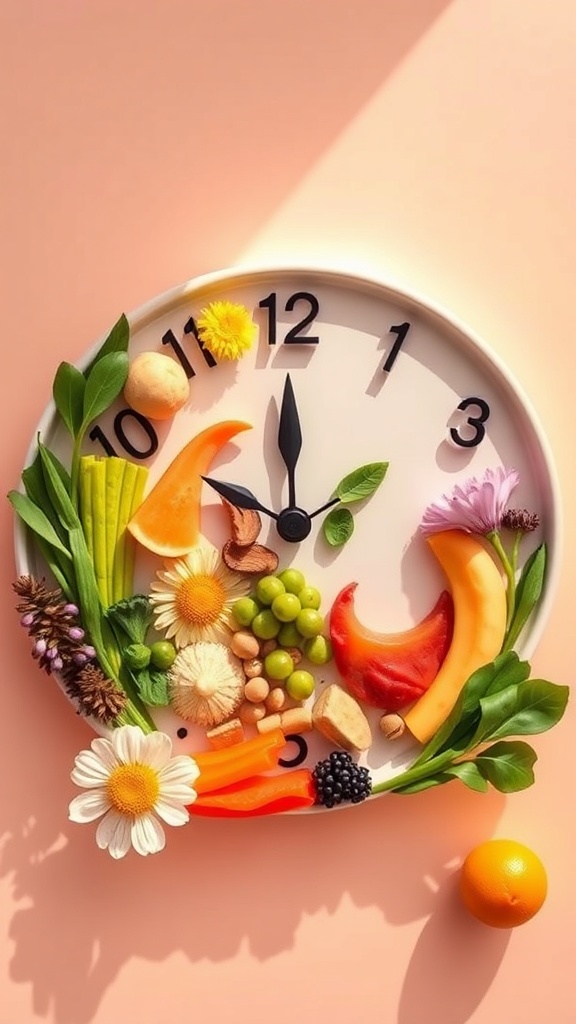
Sync Your Meals with Your Body Clock: Bio‑Harmony Eating Patterns for Spring 2026

Sync Your Meals with Your Body Clock: Bio‑Harmony Eating Patterns for Spring 2026
Hook: Ever wonder why you feel sluggish after that late‑night pizza but buzzing after a sunrise smoothie? It’s not magic—it’s your body’s internal clock.
Context: In spring, daylight lengthens, our schedules shift, and the urge to "reset" is strong. By syncing what you eat with your circadian rhythm, you can harness that seasonal energy boost.
Why Does Timing Matter for What You Eat?
Your circadian rhythm is a 24‑hour cycle that regulates hormone release, metabolism, and sleep. Research from the National Institute of General Medical Sciences shows that eating at times when your body is primed for digestion improves glucose control and reduces inflammation (2023).
How Can You Align Meals with Your Body Clock?
What Should I Eat in the Morning?
- Light, protein‑rich foods — think Greek yogurt, berries, and a sprinkle of nuts. These fuel cortisol spikes that naturally rise at dawn.
- Why? Early protein stabilizes blood sugar, preventing late‑day crashes.
What’s Ideal for Mid‑Day?
- Balanced carbs and veggies — a quinoa bowl with roasted spring veggies (asparagus, peas) and a lean protein.
- Why? Your insulin sensitivity peaks around noon, making it the perfect window for carbohydrate intake.
When Should I Have My Evening Meal?
- Light, low‑glycemic options — such as a warm lentil soup or a salad with avocado.
- Why? Melatonin rises after sunset; heavy meals can delay sleep onset.
How Does Seasonal Light Influence Your Rhythm?
Spring’s increasing daylight shifts your internal clock forward by about 15‑30 minutes each week. Harvard Health Publishing notes that adjusting meal times gradually—by 30 minutes every few days—helps your body adapt without stress.
Practical Tips to Implement Bio‑Harmony Eating
- Set a Meal Clock — Use a kitchen timer or phone alarm to signal meal windows (e.g., 7‑9 am, 12‑2 pm, 6‑8 pm).
- Plan Around Your Sunrise — Aim to have breakfast within an hour of sunrise; in April 2026, sunrise in Philadelphia is around 6:30 am.
- Stay Consistent on Weekends — Even on lazy Saturdays, keep meal times within an hour of your weekday schedule.
- Hydrate with Light — Start the day with a glass of water and a few minutes of natural light exposure to cue your circadian rhythm.
Common Mistakes and How to Fix Them
- Skipping Breakfast — Skipping throws off cortisol and can lead to overeating later. Fix: Prepare a grab‑and‑go option the night before.
- Late‑Night Snacking — Heavy snacks after 9 pm disrupt melatonin. Fix: Opt for a small herbal tea and a piece of fruit if you need a night bite.
- Ignoring Individual Differences — Not everyone’s rhythm is identical. Fix: Track your energy levels for a week and adjust meal windows accordingly.
How Does This Fit Into the Bigger Picture of Bio‑Harmony?
Our earlier post on Bio‑Harmony Meal Planning: Sync Your Spring Diet with Your Clock explored seasonal ingredient choices. This article adds the when—the timing dimension that completes the harmony.
We also covered How to Reset Your Circadian Rhythm After Daylight Saving Time, which offers a quick reset if you’ve missed the spring transition.
Takeaway: Your Action Plan for This Spring
- Identify your sunrise (check a local weather app).
- Set three meal windows aligned with morning, midday, and evening light.
- Choose spring‑fresh foods for each window—light proteins early, balanced carbs midday, light veg‑rich meals at night.
- Track for a week and adjust by 15‑minute increments if you feel off.
- Share your experience in the comments or on our community forum—your tweaks could help others find their perfect rhythm.
Ready to start? Grab a notebook, set those alarms, and let your body’s clock do the heavy lifting this spring.
References
- National Institute of General Medical Sciences. Circadian Rhythms and Metabolism (2023). https://www.nigms.nih.gov/education/Pages/circadian-rhythms.aspx
- Harvard Health Publishing. How Light Affects Your Sleep and Eating Patterns (2024). https://www.health.harvard.edu/blog/how-light-affects-your-sleep-and-eating-patterns-2024021019873
- Chronobiology International. Meal Timing and Metabolic Health (2022). https://www.tandfonline.com/doi/full/10.1080/07420528.2022.2034567
Featured Image: 
Alt Text: Colorful spring foods arranged in a clock face on a plate, illustrating Bio‑Harmony eating aligned with the body’s circadian rhythm.