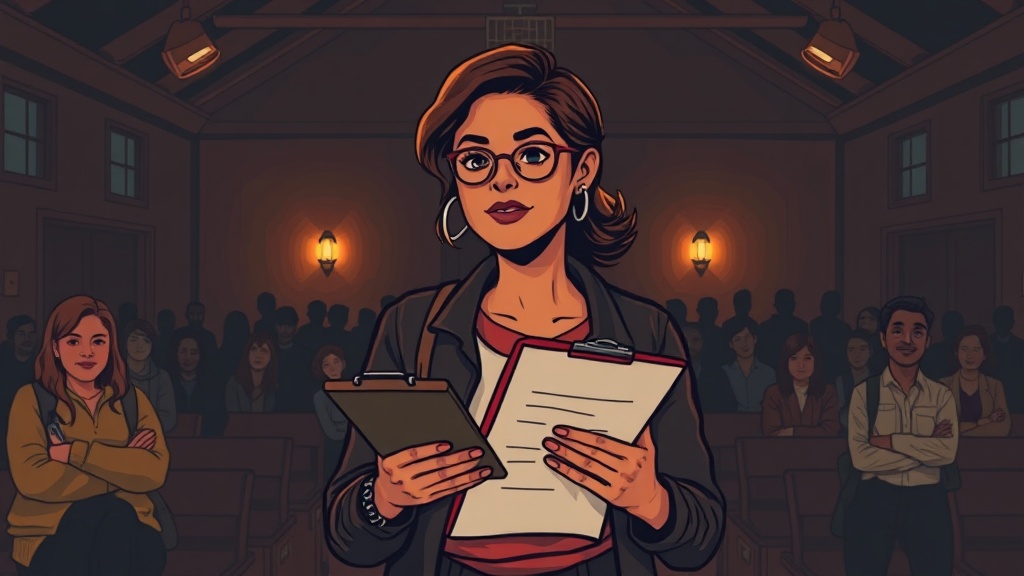
Before the Megaphone: The Invisible Labor of Women's Organizing

If you log onto any social media platform right now, you’re probably being bombarded with generic International Women’s Day content. There are pastel infographics, corporate "girlboss" quotes, and brand accounts tripping over themselves to show you how much they value "female empowerment."
But let’s be real. If you’ve ever actually been involved in movement work—whether it’s a tenant union, a strike, or mutual aid in your neighborhood—you know that the real work doesn't look like a polished Instagram graphic. It looks like a shared Google spreadsheet updated at 2 AM.
Growing up as the kid of a labor organizer and a librarian, I spent a lot of time in union halls and library stacks. The one thing I learned early on: Power is taken, not given. And taking it requires a massive, unglamorous amount of logistics.
There's this myth we love to tell about social movements—the myth of the "spontaneous" protest. We like to think people just got fed up, took to the streets, and a leader emerged with a megaphone and a perfect speech. It's a nice story, but it’s mostly a lie. Behind every powerful speech and every viral protest photo are months, sometimes years, of tedious organizing.
And historically, who has done that organizing? Women.
We are the ones expected to do the logistical and care work that keeps movements alive. We’re doing the phone banking, setting up the church basements, organizing the childcare, and figuring out how to feed fifty people on a shoestring budget. This is the invisible labor of the movement. It’s the scaffolding. But when it’s time to hand out leadership titles or hold the megaphone, those roles have historically gone to the men in the room.
We see this pattern everywhere. Ella Baker, one of the most brilliant organizers of the Civil Rights Movement, famously said, "Strong people don't need strong leaders." She fundamentally understood that the strength of a movement is in its base, in the people doing the day-to-day work, not just the charismatic figureheads. Yet, for a long time, the history books focused on the figureheads.
Today, women like Maria Harmon, co-founder of Step Up Louisiana, are doing the gruelling, necessary work of organizing for economic and education justice on the ground. Women are leading tenant unions, running reproductive justice funds, and keeping mutual aid networks afloat. They aren't doing it for the credit; they're doing it because they know that if you want a fairer society, you have to build the infrastructure for it yourself.
So this International Women’s Day, feel free to skip the pink merchandise and the generic hashtags. If you actually want to honor the women who make change possible, fund the logistics. Throw some money at a local mutual aid fund. Show up to that boring community meeting. Bring snacks for the people who have been planning the action for six months.
Because the truth is, the revolution isn't going to be a spontaneous, aesthetic event. It's going to be a highly organized, deeply unglamorous process—and it's probably going to be run by a woman with a clipboard.